Railway signalling systems, electronic interlocking panels, axle counters, data loggers, and power supply equipment need a strong earthing system. These systems can be affected by lightning, switching surges, and electrical faults. A proper earthing system safely sends this unwanted current into the ground and protects both equipment and people.
For railway and RDSO projects, earthing material cannot be selected only on the basis of price. The material must meet the required technical standards, resist corrosion, and maintain low earth resistance for many years. RDSO’s specification for signalling equipment earthing, RDSO/SPN/197, gives clear requirements for electrodes, backfill material, earth pits, bonding conductors, and testing.
Why Railway Earthing Needs Special Attention
Railway signalling equipment works in demanding conditions. It may face voltage surges, lightning, soil moisture changes, vibration, and long service periods. If the earthing system is weak, sensitive equipment may fail, trains may face signalling interruptions, and maintenance costs can increase.
A good railway earthing system should:
- Carry heavy fault currents and surges safely into the ground
- Maintain low earth resistance
- Resist corrosion for long-term performance
- Remain mechanically strong during installation and use
- Allow easy inspection and testing
RDSO specifies that the earth resistance at the main equipotential earth busbar should not be more than 1 ohm. If one earth pit cannot achieve this value because of poor soil conditions, more earth pits may be required.
Main Earthing Materials for RDSO Projects
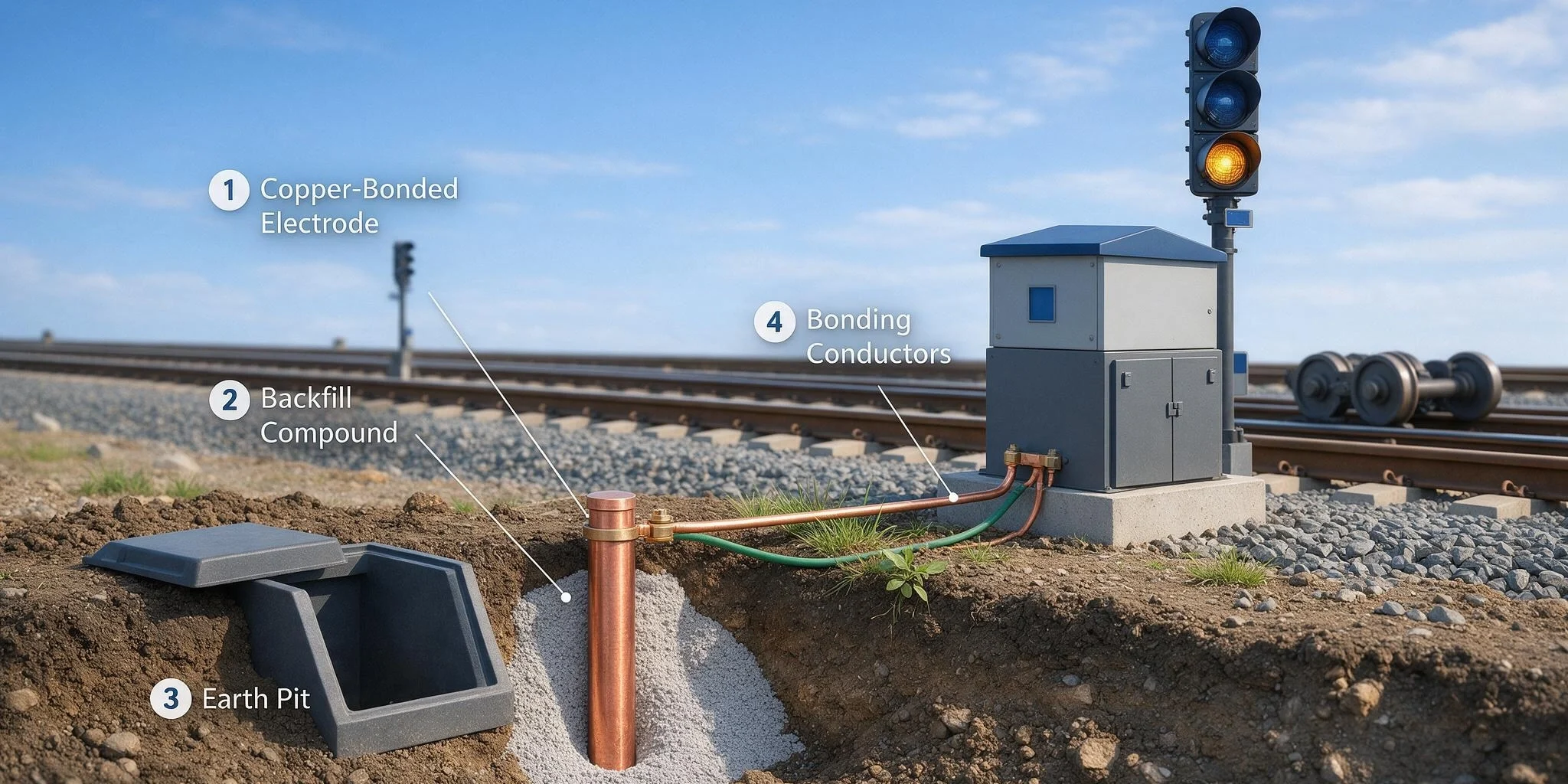
1. Copper-Bonded Earth Electrode
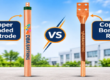
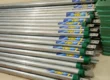
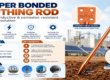
For signalling equipment earthing, RDSO prefers a copper-bonded steel earth electrode. It has a high-tensile low-carbon steel core with copper molecularly bonded on the outer surface. This combination gives the rod strength, conductivity, corrosion resistance, and cost-effectiveness.
As per RDSO/SPN/197, the earth electrode should be:
- UL listed
- Minimum 17 mm diameter
- Minimum 3 metre long
- Copper-bonded with a minimum coating thickness of 250 microns
- Made using 99.9% electrolytic-grade copper
- Clearly marked with the UL mark, manufacturer name, length, diameter, and catalogue number
In rocky areas, RDSO allows a grid arrangement using three electrodes, each 1 metre long and 17 mm in diameter.
DBA Earthing supplies copper bonded electrodes designed for projects that require reliable conductivity and corrosion protection.
2. Earth Enhancement Material
Earth enhancement material, also called backfill compound, improves contact between the electrode and the soil. It is especially useful in sandy soil, rocky ground, or areas where moisture levels change frequently.
For RDSO projects, the compound should be:
- Carbon-based, with at least 95% fixed carbon content
- Premixed with corrosion-resistant cement
- Free from bentonite
- Non-corrosive and highly hygroscopic
- Able to retain moisture and maintain conductivity
- Having resistivity below 0.2 ohm-metre
- Suitable for dry or slurry-form installation
- Maintenance-free after setting
- Supplied in sealed, moisture-proof bags
RDSO requires approximately 30–35 kg of earth enhancement material for each earth pit. It should be poured in slurry form so that it covers the full length of the electrode evenly.
3. Earth Pit and Inspection Chamber
The earth pit protects the electrode and provides access for inspection and testing. RDSO specifies a borehole of about 100–125 mm diameter and approximately 3 metre depth for a standard earth electrode installation.
The inspection chamber should follow IEC 62561-5 and have internal dimensions of 300 x 300 x 300 mm. It should be made of RCC with a 50 mm thickness and a fine finish. The cover should have space to write the testing date and earth resistance value.
A strong earth pit cover is important because railway sites often have foot traffic, maintenance activity, and sometimes vehicle movement.
4. Copper Strips, Cables, and Bonding Conductors
Earthing is not only about the electrode. The complete system must connect the electrode, earth busbar, equipment, and surge protection devices through properly sized conductors.
RDSO specifies the following minimum bonding materials:
| Component | Material | Minimum Size |
| Main equipotential earth busbar | Copper | 300 x 25 x 6 mm |
| Sub equipotential earth busbar | Copper | 150 x 25 x 6 mm |
| Equipment to sub busbar | PVC insulated copper cable | 10 sq. mm |
| Sub busbar to main busbar | PVC insulated copper cable | 16 sq. mm |
| SPD to main busbar | PVC insulated copper cable | 16 sq. mm |
| Main busbar to earth electrode | PVC insulated copper cable, duplicated | 35 sq. mm |
| Earth pit to earth pit | Copper tape or solid copper conductor | 25 x 2 mm or 8 mm dia |
The connection between the main earth electrode and the equipotential earth busbar should use a copper strip of 200 x 25 x 6 mm, exothermically welded to the electrode.
Why Exothermic Welding Is Important
Exothermic welding creates a permanent molecular bond between copper components. Unlike clamps or ordinary connections, it does not loosen easily and provides better electrical continuity over time.
RDSO requires exothermic welding for important earthing connections, including the connection between the electrode and copper strip, as well as connections between multiple earth pits. The weld material should be tested as per IEEE 837 by a NABL/ILAC-approved laboratory.
For railway projects, proper welding is essential because a loose or corroded joint can increase resistance and reduce the effectiveness of the whole earthing system.
Earth Resistance and Testing Requirements
Installing good material is only half the work. The earthing system must also be tested after installation.
RDSO recommends measuring earth resistance at the main equipotential earth busbar using the Fall of Potential method, with all earth pits interconnected. The target resistance is 1 ohm or less.
Materials should also undergo the required inspection and testing, such as:
- Visual inspection
- Dimensional check
- Copper coating thickness check
- Coating adherence test
- Tensile strength test
- Bending test
- Resistivity test for earth enhancement compound
These checks help ensure that the material supplied for the project is suitable, safe, and durable.
Common Material Mistakes to Avoid
Many railway earthing problems start with small procurement or installation mistakes. Avoid the following:
- Using electrodes with thin or uneven copper coating
- Using salt, coke breeze, cinders, ash, or sand as backfill material, as RDSO warns these can be acidic or corrosive
- Ignoring UL marking and manufacturer marking on electrodes
- Using poor-quality or unmixed backfill compound
- Installing earth pits in dry, rocky, or made-up soil
- Using undersized copper cables or strips
- Leaving connections loose instead of using proper exothermic welding
- Skipping earth resistance testing after installation
RDSO specifically advises avoiding dry sand, limestone, granite, stony ground, high banks, and made-up soil while selecting the earthing location.
Material Checklist for Railway and RDSO Projects
Before finalising a railway earthing package, confirm that you have:
- Copper-bonded earth electrode: minimum 17 mm dia, 3 m length, 250 micron copper coating
- UL listing and proper electrode marking
- IEC 62561-7 compliant earth enhancement compound
- Minimum 30–35 kg backfill compound per earth pit
- RCC inspection chamber as per required dimensions
- Copper strips, copper tape, and solid copper conductors in specified sizes
- PVC insulated copper cables in the required cross-sections
- Exothermic welding material and moulds
- Test reports, material certificates, and marking details
- Earth resistance test plan after installation
Choosing the Right Earthing Partner
Railway and RDSO projects need materials that meet specifications, not just products that look similar. Always check test certificates, coating thickness, material grade, marking, packaging, and the supplier’s ability to support project-scale supply.
DBA Earthing manufactures and supplies copper-bonded electrodes, backfill compounds, earth pit covers, earthing strips, and related earthing materials for infrastructure and electrical projects across India. The company also provides technical product guidance and supports bulk and project-based requirements.
If you are planning an earthing package for a railway signalling project, share your BOQ, soil details, and technical specifications with the DBA Earthing team. The right material selection at the start can prevent costly failures later.