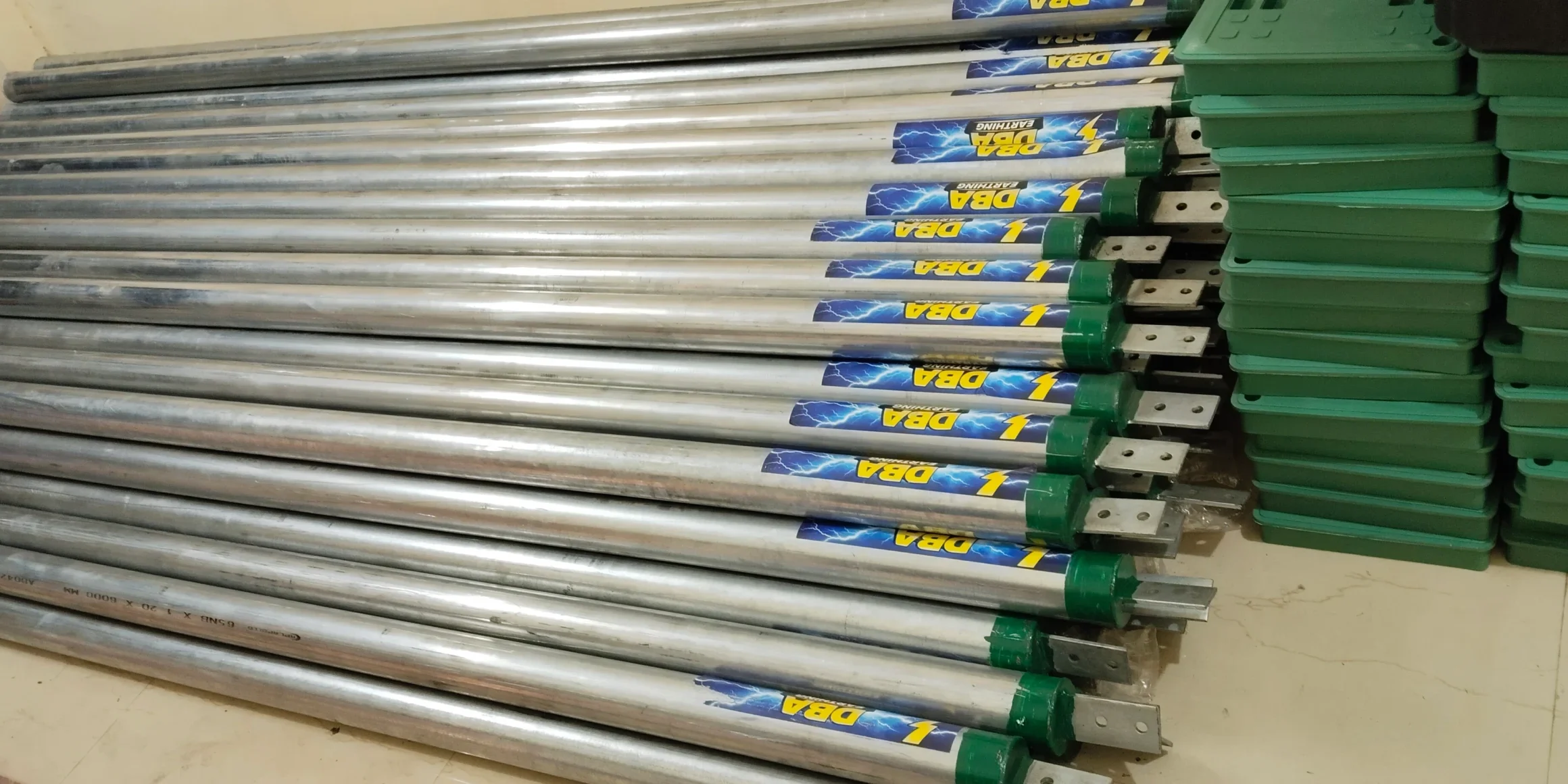
Buying earthing materials in bulk can save money but only if the products are safe, durable, and suitable for your site. A low price is not a good deal if the electrode corrodes early, the backfill compound washes away, or the earthing resistance remains high after installation.
Before placing a bulk order, check the product quality, technical specifications, supplier reliability, site conditions, documentation, and after-sales support. This guide explains exactly what to verify before you buy earthing electrodes, copper bonded rods, GI electrodes, backfill compounds, earth pit covers, and related accessories.
Know Your Project Requirement First
Do not buy earthing materials only based on quantity or price. The right product depends on the type of installation, electrical load, soil condition, and safety requirement.
Ask these questions before ordering:
- Is the earthing for a home, commercial building, factory, solar plant, telecom tower, data centre, or substation?
- What is the expected fault current and target earth resistance?
- Will the installation be in normal soil, dry soil, rocky soil, coastal soil, or chemically aggressive soil?
- Do you need copper bonded electrodes, GI electrodes, chemical earthing electrodes, earthing strips, or a complete earthing kit?
- How many pits, electrodes, clamps, covers, and bags of backfill compound are required?
Soil resistivity, moisture, salt content, and corrosion conditions directly affect the number of electrodes, electrode length, and need for earthing compound. High-resistivity soil may require longer electrodes, multiple electrodes, or a suitable ground enhancement material.
Check the Material Quality
The earthing electrode is the most important part of the system. Poor-quality material can corrode, lose conductivity, or fail during a fault.
For copper bonded rods, check:
- The base steel quality and mechanical strength.
- Uniform copper bonding, not a loose or thin coating.
- Copper coating thickness suitable for the application.
- Strong adhesion between copper and steel.
- Straight rod body, clean surface, and no cracks or rust.
- Correct diameter and length as per your specification.
A good copper bonded rod combines the strength of steel with the conductivity and corrosion resistance of copper. DBA Earthing’s copper bonded rods are manufactured with controlled copper coating thickness and tested for conductivity, adhesion, and corrosion resistance.
For GI earthing electrodes, check:
- Zinc coating quality and uniformity.
- Pipe thickness and dimensional accuracy.
- Welding or joint quality.
- Resistance to rust, especially for outdoor or moist installations.
For chemical earthing electrodes, check the electrode pipe, terminal connection, sealing quality, and the type of backfill compound supplied with it.
Verify Standards and Test Reports
Always ask the supplier for technical documents before confirming a bulk order. A reliable manufacturer should be able to share product specifications, test reports, and compliance details.
Check whether the products comply with applicable standards such as:
- IS 3043 for earthing system design and installation practices.
- IEC 62561 for lightning protection system components.
- IEEE 80 for grounding in AC substations, where relevant.
- ISO certification for manufacturing quality management.
Compliance with IS 3043, IEC, and IEEE standards is commonly considered while selecting earthing electrodes and grounding components.
Ask for:
- Material test certificate or mill test certificate.
- Copper coating thickness report, if buying copper bonded rods.
- Conductivity or resistivity test report.
- Corrosion resistance test data.
- Batch-wise quality inspection records.
- Warranty terms and replacement policy.
Do not accept only a brochure or price list. For a bulk order, documents matter as much as the product.
Check Soil Conditions Before Finalising Quantity
Many bulk buyers order the same electrode for every location, but soil conditions can vary even within the same city or industrial area. Before finalising the order, conduct a soil resistivity test at the actual installation site.
The Wenner four-pin method is commonly used to measure soil resistivity before earthing design.
Soil conditions affect:
- Electrode length and diameter.
- Number of electrodes required.
- Need for backfill compound.
- Depth of installation.
- Long-term earthing resistance.
For example, dry, sandy, or rocky soil generally has higher resistivity and may require a different earthing design than moist clay soil. Buying the correct material for the site prevents repeated maintenance and poor earthing performance.
Inspect the Backfill Compound Carefully
If you are buying chemical earthing electrodes or earthing compounds in bulk, do not treat the backfill material as a minor item. It plays a major role in maintaining low and stable earth resistance.
A good backfill or ground enhancement compound should be:
- Non-corrosive to the electrode.
- Moisture-retaining.
- Stable over time.
- Maintenance-free.
- Non-toxic and safe for surrounding soil.
- Suitable for the electrode type and site condition.
Government technical specifications for chemical earthing state that the grounding compound should be permanent and maintenance-free, should not require recharging with salts or chemicals, and should not dissolve, decompose, or pollute the soil or local water table.
Avoid compounds that depend on salt, coke breeze, cinders, ash, or other corrosive materials. These can damage the electrode and reduce the life of the earthing system.
Check Dimensions, Quantity, and Packing
Bulk orders often fail not because of product quality but because of poor packing, wrong sizes, or missing accessories. Before dispatch, confirm every item in writing.
Your purchase order should clearly mention:
- Product name and type.
- Electrode diameter and length.
- Copper coating or zinc coating specification.
- Quantity per size.
- Backfill compound weight and number of bags.
- Earth pit cover size and material.
- Clamps, strips, bolts, nuts, and other accessories.
- Packing method.
- Delivery location and delivery timeline.
Check whether rods are packed to avoid bending, coating damage, or rust during transport. Earth pit covers should be packed separately to prevent cracks. Backfill bags should be sealed properly and protected from moisture.
Compare the Complete Cost, Not Just the Price
The lowest quotation is not always the best quotation. Compare suppliers on the total value they provide.
Ask each supplier for a quotation that includes:
- Product price.
- GST and other applicable charges.
- Packing and loading charges.
- Transportation or freight charges.
- Delivery timeline.
- Test report and documentation charges, if any.
- Installation support, if required.
- Warranty and replacement terms.
A slightly higher price may be worthwhile if the supplier provides certified material, consistent quality, proper packing, timely delivery, and technical support. For large projects, delayed delivery or defective material can cost far more than the small saving made on the purchase.
Check the Supplier’s Manufacturing Capability
Before placing a large order, evaluate whether the supplier can actually deliver the required quantity on time.
Check:
- Manufacturing capacity.
- Stock availability.
- Previous bulk supply experience.
- Client references or project portfolio.
- Ability to provide custom sizes.
- Quality control process.
- Pan-India delivery capability.
- Response time for technical queries.
DBA Earthing supplies copper bonded rods, GI earthing electrodes, copper earthing electrodes, backfill compounds, earth pit covers, and lightning protection products for residential, commercial, and industrial applications.
For copper bonded rods specifically, DBA Earthing provides retail and bulk supply options and also offers installation and testing support.
Ask About Installation and Testing Support
Buying material is only one part of the job. Correct installation and testing decide whether the earthing system performs safely.
Ask the supplier whether they provide:
- Site survey.
- Soil resistivity testing.
- Guidance on electrode selection.
- Installation support.
- Earth resistance testing after installation.
- Test certificates or reports.
- Maintenance guidance.
A proper installation process generally includes site survey and soil resistivity testing, selection of the correct rod length and diameter, proper driving of the rod, application of backfill compound, and testing of earthing resistance.
If your contractor is handling installation, still ask the supplier for installation instructions and recommended torque, depth, spacing, and backfill quantity.
Confirm Warranty and After-Sales Support
A bulk purchase should come with clear warranty terms. Get the warranty in writing, not as a verbal promise.
Check:
- Warranty period.
- What the warranty covers.
- Whether it covers manufacturing defects only or also performance issues.
- Replacement process for damaged or defective items.
- Availability of technical support after delivery.
- Response time for complaints.
For large projects, ask whether the supplier can provide replacement material quickly if any item is found damaged during transit or installation.
Quick Bulk Buying Checklist
Use this checklist before confirming your earthing material order:
- Confirm project type and earthing requirements.
- Conduct or review a soil resistivity test.
- Select the correct electrode type: copper bonded, GI, pure copper, or chemical earthing.
- Check copper coating thickness, zinc coating, material grade, and dimensions.
- Ask for IS, IEC, IEEE, or ISO compliance documents.
- Request batch-wise test reports.
- Verify backfill compound quality and confirm it is non-corrosive and maintenance-free.
- Confirm electrode, clamp, strip, pit cover, and compound quantities.
- Compare total landed cost, including freight and taxes.
- Check packing, dispatch schedule, and delivery timeline.
- Confirm warranty, replacement policy, and after-sales support.
- Ask for installation and earthing resistance testing support.
Does DBA Earthing accept bulk orders?
Yes, DBA Earthing provides retail and bulk supply options for copper bonded rods and related earthing products, along with installation and testing support.
Bulk earthing material purchase is a safety investment, not just an electrical purchase. Choose materials that match your soil, load, and project standards; insist on documentation; and buy from a supplier who can support you before and after delivery.
FAQs
What is the most important thing to check before buying earthing materials in bulk?
Check the material quality, technical specifications, test reports, and suitability for your soil condition. Price should be considered only after these factors are confirmed.
Which earthing electrode is best for bulk purchase?
It depends on the application. Copper bonded rods are commonly preferred for better conductivity and corrosion resistance, while GI electrodes may be suitable where cost and specific project requirements matter.
Why is soil testing important before bulk ordering?
Soil resistivity affects electrode size, depth, quantity, and the need for backfill compound. Testing helps avoid under-designed or over-designed earthing systems.
Should I buy an earthing compound with salt?
No. Avoid salt-based or corrosive backfill materials because they can damage electrodes and reduce system life. Use a stable, non-corrosive, maintenance-free ground enhancement compound.