
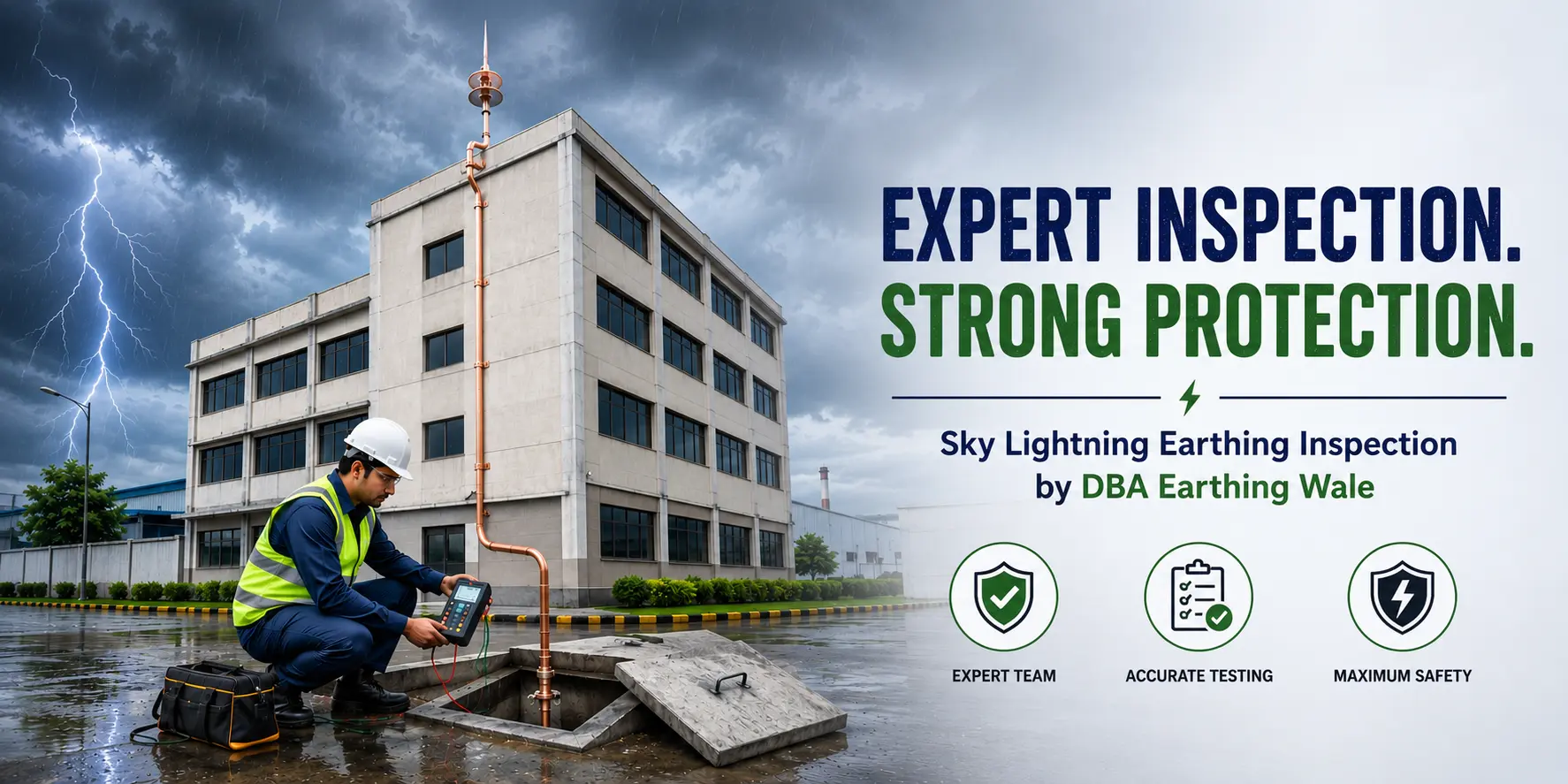
Imagine a heavy monsoon evening in Mumbai. Thunder is rolling, rain is pouring, and a lightning strike hits somewhere near your building. A moment later, your main panel trips, cameras go offline, and a few computers stop working.
You may not see fire or smoke, but something is clearly wrong. In many cases, the real problem is faulty sky lightning earthing. When earthing is not working properly, dangerous surge energy can travel through cables, equipment, and building structures instead of safely moving into the ground. This can lead to equipment damage, fire risk, electric shock, downtime, and costly repairs.
Why Is Proper Lightning Earthing Important?
A good lightning earthing system is not just a technical requirement. It is a safety measure that protects people, equipment, and the building itself. When lightning energy is properly diverted into the earth, the risk of shock and damage becomes much lower.
It also helps protect sensitive devices like computers, servers, CCTV systems, PLCs, VFDs, and fire alarm panels. Even if lightning does not strike your building directly, nearby strikes can still create harmful surges. Proper earthing, along with surge protection, helps reduce those risks.
Good earthing also supports fire safety and business continuity. A single lightning event can stop production, damage systems, or interrupt important services. In many cases, it also helps buildings stay in line with safety standards and inspection requirements.
7 Signs Your Sky Lightning Earthing Is Faulty
1. Visible Corrosion on Earthing Components
If you open your earthing pit or look at rooftop connections and see greenish, whitish, or reddish deposits on clamps, strips, or electrode terminals, that’s corrosion.
Causes
- Exposure to moisture, chemicals, salty seaside air, or industrial fumes.
- Use of dissimilar metals without proper bonding (e.g., copper strip directly on GI without anti-corrosion measures).
- Poor-quality clamps, fasteners, or untreated metal surfaces.
Risks
Corrosion reduces the effective contact area and increases resistance at joints, which can cause local heating and reduce the ability of the system to carry lightning safely. In extreme cases, corroded joints can break during a strike, leaving the arrester effectively “floating” without a safe path.
What to do
- Arrange a visual inspection of all accessible joints in pits and at rooftop arresters.
- Replace corroded clamps, bolts, and lugs with high-quality, tested components as per relevant standards.standards.
- Apply anti-corrosion compounds and use compatible metals to minimise galvanic corrosion.
- Consider chemical earthing electrodes if your soil is highly corrosive or industrial.
2. Loose or Broken Earthing Connections
Lightning currents are extremely high, and they need a continuous low-resistance path. Loose, cracked, or broken connections are a serious safety risk.
Symptoms you may notice
- Earthing strip or wire hanging loosely near the roof or wall.
- Clamps that move when touched, missing bolts, or half-tight nuts.
- Termination in the earthing pit fixed only with twisted wire instead of proper lugs and clamps.
Inspection tips
- Visually follow the down conductor from the arrester to the earthing pit, checking every clamp, bend, and joint.
- Gently press each joint—if it moves, it is not tight enough for lightning duty.
- Check that the conductor is not cut, bent sharply, or re-routed through temporary makeshift fixes.
Loose or broken connections can cause arcing, local damage to concrete or brickwork, and increased chance of side flashes to nearby metal parts. Call a qualified earthing contractor or lightning protection specialist to re-make joints with tested hardware and proper crimping or bolting.
3. Rusted Lightning Protection Conductors
Conductors (GI strips, copper strips, or wires) are the backbone of your lightning path. Rust is more than a cosmetic issue—it increases resistance.
Why is corrosion dangerous
- Rusted GI strips have reduced cross-section, lowering current-carrying capacity.
- Uneven corroded surfaces increase the impedance, especially important for high-frequency lightning impulses.
- In severe rusting, conductors can crack, leaving open points in the system.
What to check
- Look along the external down conductor: is the surface uniformly metallic, or patchy and flaky?
- In pits, check the visible part of the electrode connection and the strip entering the soil.
- In coastal or industrial environments, conductors may age much faster than expected.
If rust is widespread, upgrading to copper or tinned copper conductors and using chemical earthing electrodes with proper backfill compounds can significantly improve reliability.
4. Frequent Equipment Damage During Storms
Sensitive electronics are often the first “indicator” that your lightning earthing is not working properly.
Typical examples
- Computers or servers reboot or fail during thunderstorms.
- CCTV cameras and NVRs get damaged, especially those mounted on poles or rooftops.
- Motor drives (VFDs), PLC panels, and control systems show frequent card failures.
Even if lightning doesn’t hit your building directly, nearby strikes can induce surges in power and data cables. Without a dependable lightning earthing system and surge protection devices, these surges find paths through your equipment.
If you notice a pattern—“every monsoon, something gets damaged”—it’s a clear sign to inspect and test your lightning protection and earthing system instead of blaming only utility supply.
5. High Earthing Resistance Test Results
Earth resistance is a measure of how easily current flows from your electrode into the soil. Lower resistance generally means better performance for lightning earthing.
What is earth resistance?
Earth resistance is the total resistance between the earthing electrode and the surrounding soil measured at low frequency using a specific instrument and test method.
Recommended values
For lightning protection systems, international guidance such as IEC 62305-3 recommends that each earth termination should not exceed around 10 ohms, with well-designed ring systems often achieving much lower values. For power system earthing or special installations, values may differ and are guided by standards like IS 3043 and IEEE 80.
When testing is needed
- During installation of new lightning earthing or chemical earthing systems.
- Annually or as per risk category of the building.
- After major construction, soil compaction, or nearby excavation.
- Whenever equipment failures or visible damage suggest poor earthing.
If your test results are consistently higher than recommended, a professional may suggest adding extra electrodes, using chemical earthing, improving backfill, or interconnecting multiple pits to form a better earth system.
6. Cracks Around Earthing Pit
The area around your earthing pit tells you a lot about the “health” of your system.
Why cracks matter
- Cracked concrete or sunken chambers may indicate soil movement, settlement, or long-term moisture loss.
- Persistent dry, powdery soil around the pit can increase earth resistance and reduce performance.
- If the pit has been damaged by vehicle movement, heavy loads, or tree roots, connections may have shifted.
Maintenance aspects
- Ensure the earthing pit cover is intact, level, and does not allow water to flood or stagnate excessively.
- Keep heavy vehicle movement away from pits in parking or driveway areas.
- If cracks are large, have the pit rebuilt properly and retest the earthing resistance.
A dry or structurally damaged pit can turn a once-good earthing system into a faulty one without anyone noticing until a serious event occurs.
7. Your Earthing System Has Never Been Inspected
One of the biggest risks is simply “no inspection.” Many buildings install lightning protection once and forget about it.
Environmental conditions, corrosion, construction changes, and new equipment installations can gradually reduce the system’s effectiveness. Standards and best practices recommend periodic inspections—often annually—and more detailed testing every few years depending on the type of structure.
If your building, factory, or warehouse has never had a formal lightning earthing inspection or testing report, it is safer to assume the system may be partly or completely ineffective until verified.
What Happens If You Ignore These Signs?
Ignoring earthing problems can turn a small issue into a big and expensive one. Repeated equipment damage, unplanned downtime, and repair costs can quickly add up, especially in commercial and industrial buildings.
There is also a safety risk. Loose joints and high-resistance connections can overheat, spark, or even start a fire. In addition, poor earthing can create insurance and compliance issues after a lightning-related event.
How Professionals Inspect Lightning Earthing
A professional lightning earthing inspection is systematic and documented. Here is what typically happens.
- Check lightning arresters, mounting, and positioning.
- Trace down conductors and verify their route and integrity.
- Inspect earthing pits, covers, and visible connections.
- Measure the resistance of each earthing electrode using approved methods (e.g., fall-of-potential, clamp-on) and instruments.
- Identify any open circuits or poor joints.
- Tighten all accessible joints using correct torque and hardware.
- Replace temporary or corroded fixes with permanent solutions.
- Recommend protective coatings, replacement, or upgrades where necessary.
- Prepare test reports with measured values, photographs, and observations.
- Mark earthing points on drawings or site layouts.
- Suggest corrective actions: additional electrodes, chemical earthing, surge protection devices, bonding improvements, or regular maintenance plans.
When Should You Call Professionals
It’s time to call a professional if your property has been struck by lightning, your earthing system hasn’t been inspected for years, or you notice signs like corrosion, loose conductors, damaged earth pits, frequent equipment failures, or high earth resistance readings. You should also schedule an inspection before every monsoon season and after major building renovations or the installation of rooftop equipment.
At DBA Earthing, we provide reliable earthing and lightning protection solutions for homes, factories, warehouses, and commercial buildings. If you’ve noticed any warning signs, don’t wait for costly damage. A professional earthing inspection is quick, cost-effective, and helps keep your property and electrical systems safe. Contact DBA Earthing for lightning earthing inspections, chemical earthing, lightning arrester installation, and preventive maintenance services.
Frequently Asked Questions
1. How do I know if my lightning earthing is faulty?
You may notice corrosion, loose conductors, damaged joints, cracked pits, high resistance readings, or repeated equipment failures during storms. These are all warning signs that the system needs inspection.
2. How often should lightning earthing be tested?
Most buildings should have a visual inspection every year. Resistance testing is often done every 1 to 3 years, depending on the building type and risk level.
3. Can faulty earthing damage appliances?
Yes. If surges are not properly diverted, they can travel through power and data cables and damage computers, CCTV, PLCs, VFDs, and other sensitive equipment.
4. What is acceptable earthing resistance?
For lightning protection, many systems aim to stay at or below about 10 ohms, though the exact target depends on the design, standards, and site conditions.
5. Can lightning damage equipment without a direct strike?
Yes. Nearby lightning can still induce surges in power lines, data cables, and metal structures, even if the building itself is not hit.
6. How much does lightning earthing inspection cost?
The cost depends on the size of the building, number of earthing points, access, and reporting needs. Still, inspection is usually much cheaper than replacing damaged equipment later.
7. Can rust affect lightning protection?
Yes. Rust weakens the conductor, increases resistance, and makes the system less reliable during a strike.
8. Is earthing required for residential buildings?
Yes. Homes should have proper electrical earthing, and in high-risk locations, lightning protection should also be considered.
9. What happens if an earthing pit dries out?
Dry soil usually has higher resistance, which can reduce the effectiveness of the earthing system. Regular testing and proper soil treatment can help.
10. Who should inspect lightning protection systems?
A qualified electrical engineer, earthing contractor, or lightning protection specialist should carry out the inspection.