Electrical safety is a critical concern in modern residential, commercial, and industrial environments. With increasing dependence on electrical and electronic systems, the importance of a properly designed earthing system and grounding system cannot be overstated. While the terms earthing and grounding are often used interchangeably, they serve distinct purposes within electrical installations. Understanding the difference between earthing and grounding helps ensure better protection of people, equipment, and infrastructure.
In this article, we explain the concepts of earthing and grounding, their differences, why both are essential, and how they contribute to effective electrical protection—especially in commercial earthing installations.
What Is Earthing?
Earthing refers to the process of connecting the non-current-carrying parts of electrical equipment (such as metal enclosures, frames, or bodies) directly to the earth. The main purpose of earthing is human safety.
If insulation fails or a fault occurs, earthing provides a low-resistance path for fault current to flow into the ground. This prevents the metal body of equipment from becoming live and reduces the risk of electric shock.
Key Functions of Earthing
- Protects people from electric shock
- Prevents fire hazards due to leakage current
- Maintains equipment safety during faults
- Ensures compliance with electrical safety standards
A well-designed earthing system is essential for homes, factories, offices, hospitals, and all types of electrical installations.
What Is Grounding?
Grounding is the process of connecting one point of an electrical circuit—usually the neutral—to the earth. The primary objective of grounding is system protection and voltage stabilization.
A grounding system helps maintain voltage levels during normal operation and fault conditions. It protects electrical equipment from damage caused by lightning, surges, or unbalanced loads.
Role of Grounding
- Stabilizes system voltage
- Protects electrical equipment
- Provides a reference point for circuits
- Ensures proper operation of protective devices
A grounding wire connects the circuit to the ground, ensuring safe dissipation of excess electrical energy.
Earthing vs Grounding: Key Differences (Brief Overview)
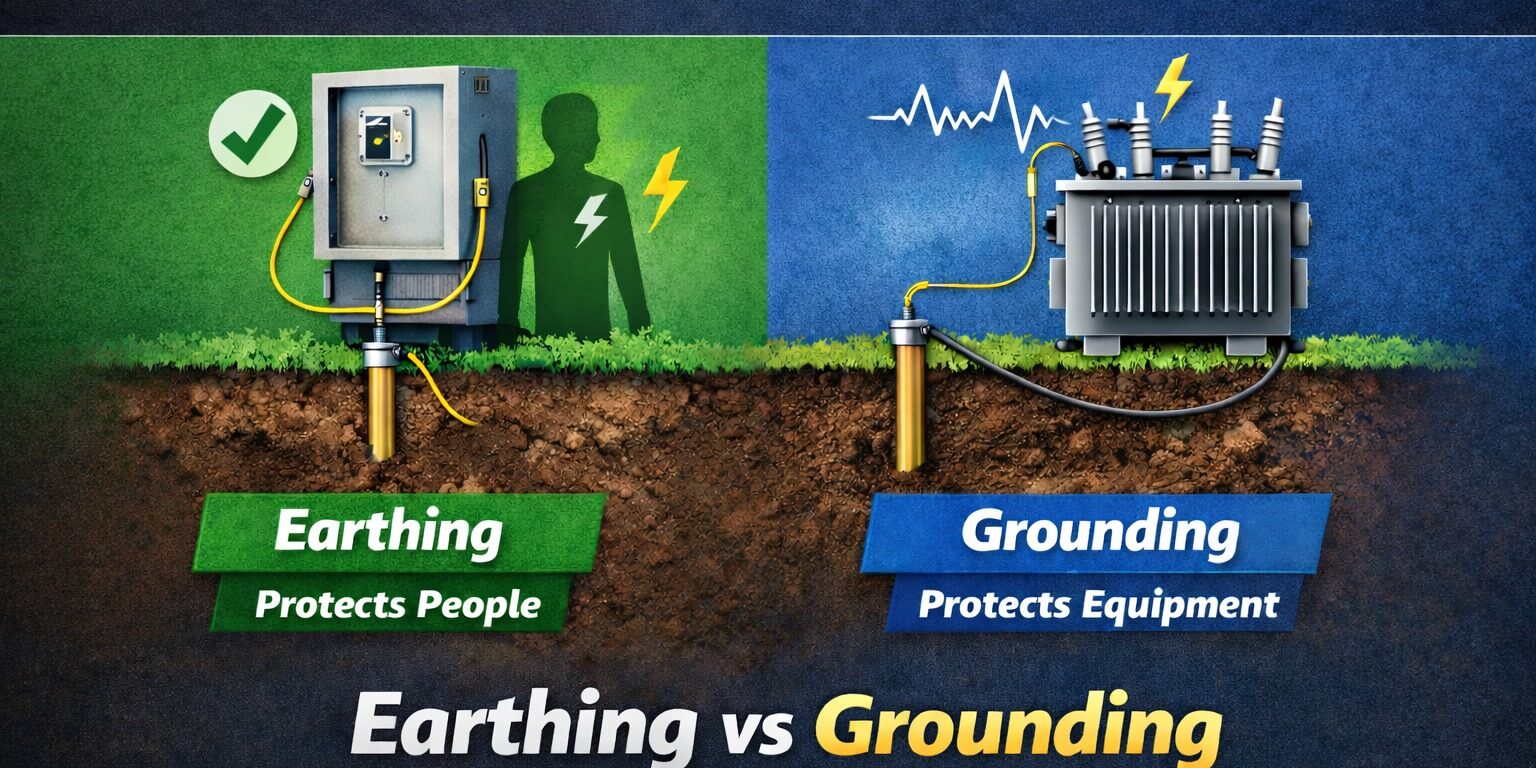
Earthing: Focuses on human safety by connecting non-current-carrying metal parts of equipment to the earth, preventing electric shock during faults.
Grounding: Focuses on system stability by connecting the electrical circuit (usually neutral) to the earth, protecting equipment from voltage fluctuations.
In short:
Earthing protects people, grounding protects equipment—and both work together to ensure complete electrical safety.
Why Both Earthing and Grounding Matter
Relying on only earthing or grounding is not sufficient. A safe electrical setup requires both to function effectively:
- Earthing prevents exposed metal parts from becoming dangerous
- Grounding ensures voltage control and system reliability
- Together, they reduce equipment damage, downtime, and accidents
In large installations, such as factories and data centers, poor earthing or grounding can lead to severe safety hazards and operational failures.
Importance in Commercial Earthing Installation
In commercial earthing installation, the complexity of electrical loads, sensitive equipment, and human occupancy demands a robust design. Shopping malls, IT parks, hospitals, and industrial buildings require a properly engineered earthing system combined with an efficient grounding system.
Benefits include:
- Reduced risk of electric shock to staff and visitors
- Protection of expensive electronic equipment
- Compliance with safety regulations
- Improved system performance and longevity
Professional planning and execution are essential to ensure reliability.
Components of an Effective Earthing and Grounding System
A complete system includes:
- Earth electrodes (rods, plates, strips)
- Earthing conductors
- Grounding wire and busbars
- Earth pits and covers
- Backfill compounds to reduce resistance
Each component must be selected based on soil condition, load requirement, and safety standards.
Common Mistakes to Avoid
- Assuming earthing and grounding are the same
- Using undersized grounding wire
- Poor soil treatment leading to high resistance
- Lack of regular inspection and testing
These mistakes can compromise safety and system efficiency.
Why Choose Expert Earthing Solutions
Designing a reliable earthing and grounding setup requires technical expertise and quality materials. DBA Earthing – Mumbai, India specializes in providing professional solutions for residential, industrial, and commercial earthing installation projects.
With a focus on safety, compliance, and performance, DBA Earthing delivers customized earthing systems and grounding solutions that meet modern electrical standards.
Conclusion
Understanding the difference between earthing and grounding is crucial for ensuring complete electrical protection. Earthing safeguards people, while grounding protects the electrical system itself. Together, they form the foundation of safe and reliable electrical installations.Whether for homes, factories, or commercial buildings, investing in a properly designed earthing system and grounding system is not optional—it is essential.
With expert support from DBA Earthing – Mumbai, India, you can ensure long-term safety, compliance, and peace of mind.Need expert guidance on earthing and grounding solutions? Contact us today for reliable products, professional support, and customized electrical safety solutions across Mumbai and nearby regions.
Frequently Asked Questions (FAQs)
Q1. What is the main difference between earthing and grounding?
Earthing protects people from electric shock, while grounding protects electrical systems and equipment.
Q2. Why is a grounding system important in electrical installations?
A grounding system stabilizes voltage levels and protects equipment from surges and faults.
Q3. What role does a grounding wire play?
A grounding wire provides a safe path for excess current to flow into the earth during faults.
Q4. Is earthing mandatory for commercial earthing installation?
Yes, earthing is mandatory for safety compliance and protection in all commercial installations.Q5. Who provides reliable earthing and grounding solutions in Mumbai?
DBA Earthing – Mumbai, India offers trusted earthing and grounding solutions for residential, industrial, and commercial projects